Santa Lucia is best known for its seafront strip lined with upmarket hotels and seafood restaurants, as well as Borgo Marinari, the tiny marina at the base of Castel dell'Ovo.
Is Santa Lucia suitable for evening activities?
Santa Lucia is suitable for evening activities, especially dining at seafood restaurants along the seafront.
What is Borgo Marinari in Santa Lucia?
Borgo Marinari is the tiny marina at the base of Castel dell'Ovo and is one of the most photographed spots in Naples.
At a Glance: Santa Lucia
Typical visit
A few hours to a full day including dining and a castle visit
Best time
Late spring to early autumn features mild weather suitable for waterfront walks and boat tours. Winter is quieter but less suited for outdoor activities.
Start from Naples and go along the Amalfi Coast. Set sail from Borgo Marinari to see Castel dell'Ovo and the waterfront. Head towards Mergellina, then to Posillipo, viewing grottos and seaside villas like Villa Lauro and Villa Volpicelli. Continue to Marechiaro, a fishing village, and Gaiola Island. Sail, take a swim, snorkel in clear waters, and drink refreshments (at your own expense). Learn about the area's history. Return to the original meeting point after the tour.
Stroll through the lanes in Naples and absorb its unique Italian culture with your expert tour guide. They will narrate the most riveting stories about the region. Your tour will begin from Piazza Plebiscito, continue passing through the Gallery Umberto I, and reach the famous Spanish Quarters. The narrow lanes will give you a glimpse into the conversations of the local people, the sounds of the busy intersections with Vespas driven around, and the classic balconies crowding your view of the sky. Your walk will help you realize how deeply embedded Diego Maradona, the Argentine football player, is inside the culture of Naples. You will see the deep adoration of the Neapolitan people towards Maradona on every corner of every street. Naples’ connection with Maradona knows no bounds. His legacy can be found everywhere in the city: from the street murals to the fireworks called “Maradona's balloon,” from the poems dedicated to him, up to the statuettes of the Neapolitan nativity scene, from souvenirs to desserts. You will visit two of the must-see destinations for any Naples’ number 10 aficionado: Vico Lungo Gelso and Piazza Maradona via Emanuele De Deo. Here, you will admire, in all their majesty and reverence, the most famous murals dedicated to Pibe de Oro. This guided tour in the narrow alleys in the heart of Naples will expose you to the culture of Italy and its people. With the optional upgrade, enjoy a Neapolitan coffee tasting in a bar that is entirely dedicated to Maradona. Admire the small altar dedicated to the player, adorned with photographs and even a strand of his hair, as you savor a delicious cup of Neapolitan coffee. The upgraded tour also includes a visit to Via San Gregorio Armeno, the famous street of nativity scenes. The artistry of the Neapolitan crib statuettes will leave you in awe, and you'll have the opportunity to take home a beautiful souvenir of this experience. Itinerary Piazza del Plebiscito | Galleria Umberto I | Quartieri Spagnoli | Vico Lungo Gelso | Piazza Maradona (Via Emanuele de Deo) | Spaccanapoli | Via San Gregorio Armeno
Underneath old Naples, there's a mirror of the city – cavernous and deep, this second city has sheltered and nourished Naples for millennia. Napoli Sotterranea dates back to 470 BC when the Greeks created underground cisterns for rainwater, and the Romans expanded on it with an aqueduct that served for centuries. As you venture lower, you'll be surprised by the 90% humidity. Imagine the intensified heat for the hundreds who sought refuge here as bombs rained down on Naples in the 1940s.
Set sail for an adventure aboard the hydrofoil from Naples to the port of Ischia. Feel the sea breeze as you travel across the water, leaving the city's hustle behind. A transfer service will take you from the Ischia port to the Poseidon Thermal Gardens. The Poseidon Thermal Gardens in Ischia offer a unique blend of natural beauty and therapeutic relaxation. Surrounded by Mediterranean vegetation, these gardens have various a diverse range of thermal pools with different temperatures and mineral compositions. You can enjoy hot springs, Jacuzzis, saunas, Turkish baths, and relaxation areas for a rejuvenating experience.
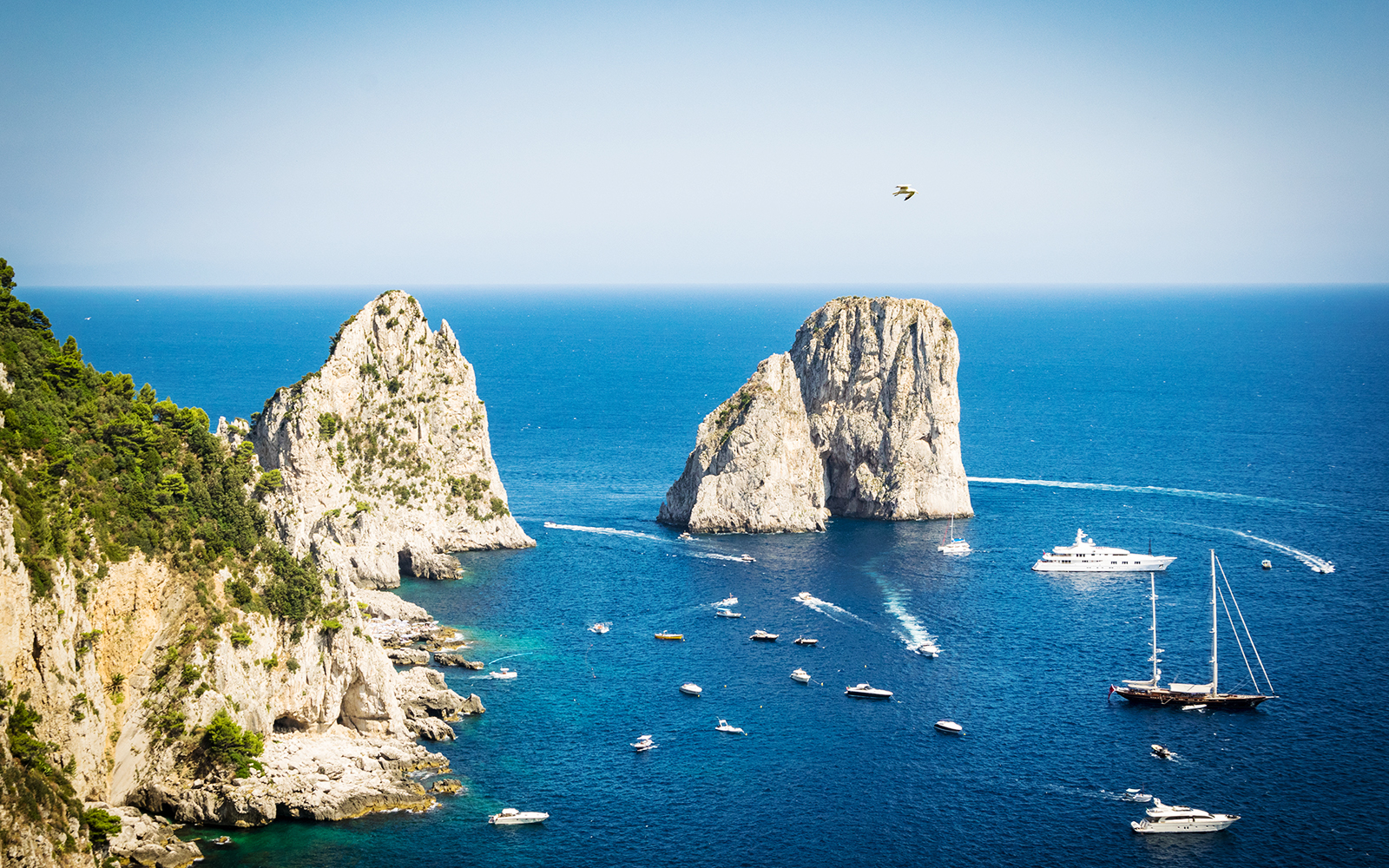
This full-day guided tour begins in Naples with a jetfoil crossing to the island of Capri, offering expansive views of the Tyrrhenian Sea and the rugged coastline of Campania. Upon arrival at Marina Grande, the island's main harbor, the tour proceeds with a visit to the Blue Grotto, conditions permitting. The grotto's entrance is a small sea cave, illuminated from within by sunlight reflecting through the underwater cavity, casting an ethereal blue glow on the water’s surface. Subsequently, the group travels to Capri town, where the narrow streets and piazzas provide a glimpse into island life, punctuated by local shops and cafes. The tour includes a visit to the Augustus Botanical Gardens, which lie near the old Roman ruins and provide panoramic views of the Faraglioni, three massive limestone stacks rising from the sea. After time for independent wandering or lunch, the group reconvenes at Marina Grande for the return journey to Naples. Key stops on this itinerary include the Blue Grotto, where boatmen maneuver small rowboats through the cave's low entrance, inviting visitors to witness the intense blue reflections caused by sunlight passing through an underwater cavity. The main town of Capri offers a lively atmosphere centered around La Piazzetta, a small square known as the "living room of the world," where locals and visitors mingle amid historic architecture. The Augustus Botanical Gardens provide a quiet retreat with terraced paths, fragrant Mediterranean flora, and views of the Faraglioni rocks, which have been subjects of art and literature for centuries. Each stop combines natural beauty with cultural and historical significance, adding layers to the island's character. The tour is conducted by a local, highly rated guide who provides commentary in English and navigates the group through the island’s highlights efficiently. Group sizes are kept moderate to ensure personal attention and smooth logistics, especially during boat transfers and visits to the Blue Grotto. Transportation includes a modern jetfoil for the sea crossing and small boats for the grotto visit. The pace balances structured visits with free time, allowing participants to absorb the atmosphere. The guide also assists with tips on local dining and shopping for those wishing to extend their stay. This tour suits travelers interested in combining natural landmarks with cultural encounters in a single day. It appeals to those comfortable with boat travel and moderate walking on uneven surfaces, including steps and cobblestone streets. Ideal for visitors wanting a comprehensive overview of Capri’s main sights without the need for independent planning or navigating public transport. It is less suited for travelers with mobility restrictions due to the boat boarding and some walking required.
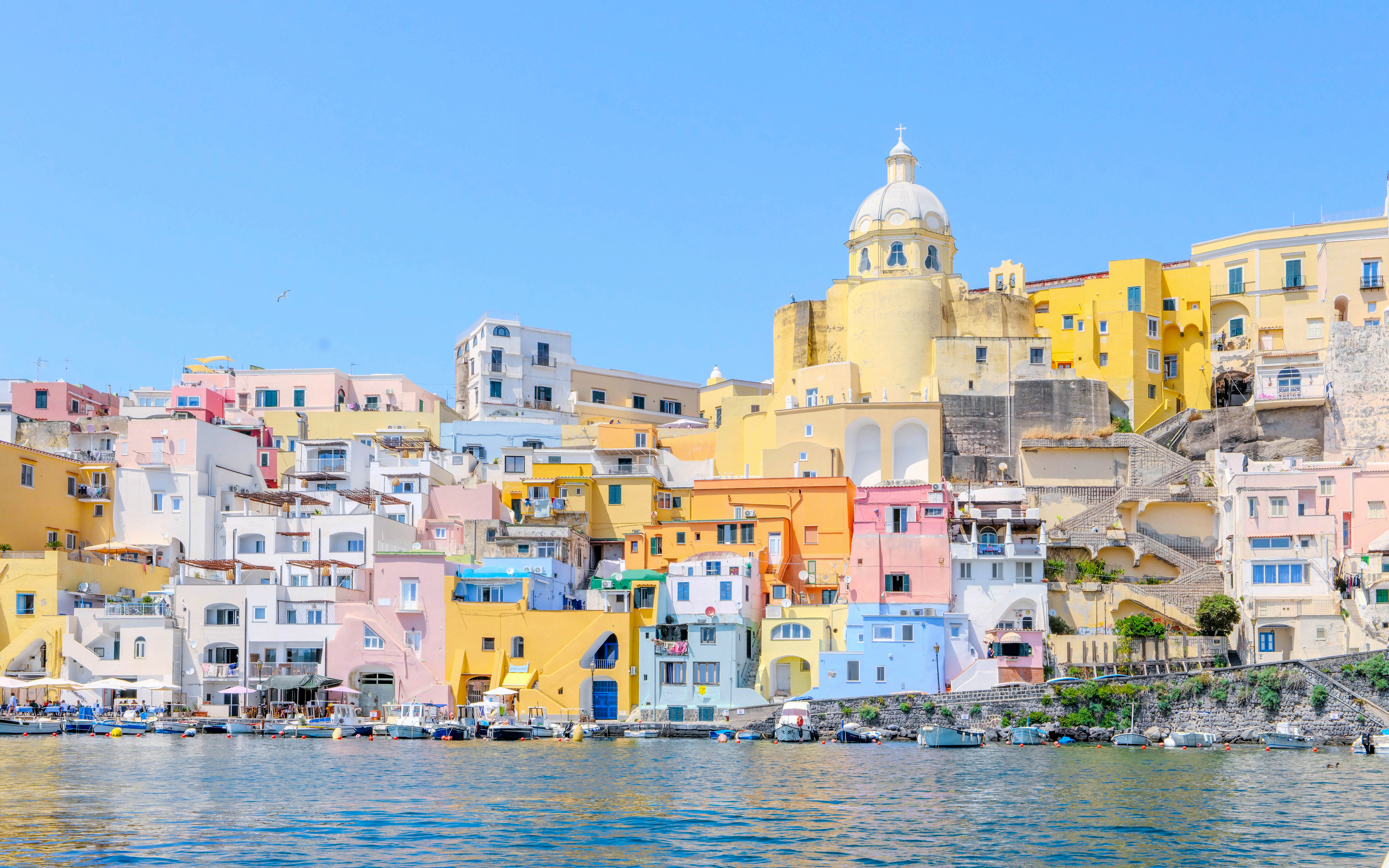
Sail from Naples to Procida for an island adventure, including a traditional boat tour with swim stops and free time to explore. Getting started Meet at Molo Beverello in Naples, where your hydrofoil tickets are sent via WhatsApp or email for easy check-in. After a 40-minute crossing, disembark at Marina Grande in Procida Island and join your local skipper for the boat tour introduction. What to expect Procida Island Procida Island is renowned for its colorful fishing villages and volcanic coastline. This sightseeing cruise combines a guided boat tour with the freedom to discover the island at your own pace. Features Coastal boat tour: Circle Procida on a traditional gozzo with a local skipper, learning about the island’s volcanic origins and maritime history while taking in stunning coastal scenery. Iconic sights: Pass Postino Beach, Ciraccio and Chiaiolella beaches, the pastel harbor of Marina di Corricella, the medieval village of Terra Murata, and the Abbey of San Michele. Swimming or snorkeling: If you opt for the extended 2-hour tour, enjoy stops in secluded coves for a refreshing swim or snorkel in crystal-clear waters. Free time on the island: After the cruise, wander Procida’s charming streets, relax on beaches, or explore historic sites before returning to Naples by hydrofoil.
The seafront strip between Castel dell'Ovo and Via Partenope, lined with upmarket hotels and seafood restaurants. Borgo Marinari — the tiny marina at the base of the castle — is one of the most photographed spots in the city.
“
“Santa Lucia’s appeal lies in its coastal calm and accessibility. Staying here means you can enjoy the sea air and easily reach Naples’s main attractions on foot or by short transit rides. The blend of historic sites like Castel dell'Ovo and modern hotels makes it a practical and pleasant base for visitors.”
Luca Romano/ Naples local guide
What is Santa Lucia like?
Santa Lucia has a relaxed, maritime atmosphere defined by its seaside location and hotel-lined promenade. The sound of waves mingles with the occasional street musician and the aroma of fresh seafood from local trattorias. It suits travelers who prefer quieter evenings by the water, with easy access to Naples’s historical and cultural sites. The district feels more residential and low-key compared to the dense, lively old town, attracting visitors looking for a scenic waterfront setting without the crowds.
The seafront strip between Castel dell'Ovo and Via Partenope, lined with upmarket hotels and seafood restaurants. Borgo Marinari — the tiny marina at the base of the castle — is one of the most photographed spots in the city.
“
“Santa Lucia’s appeal lies in its coastal calm and accessibility. Staying here means you can enjoy the sea air and easily reach Naples’s main attractions on foot or by short transit rides. The blend of historic sites like Castel dell'Ovo and modern hotels makes it a practical and pleasant base for visitors.”
Luca Romano/ Naples local guide
What is Santa Lucia like?
Santa Lucia has a relaxed, maritime atmosphere defined by its seaside location and hotel-lined promenade. The sound of waves mingles with the occasional street musician and the aroma of fresh seafood from local trattorias. It suits travelers who prefer quieter evenings by the water, with easy access to Naples’s historical and cultural sites. The district feels more residential and low-key compared to the dense, lively old town, attracting visitors looking for a scenic waterfront setting without the crowds.
Late spring to early autumn features mild weather suitable for waterfront walks and boat tours. Winter is quieter but less suited for outdoor activities.
How long should you spend in Santa Lucia?
Duration
A few hours to a full day including dining and a castle visit
Where can you park in Santa Lucia?
Practical
Parking is limited and mostly paid; using public transit or walking from central Naples is recommended.
Santa Lucia is generally safe during the day and evening, though standard precautions apply as in any tourist area. Keep an eye on belongings when near crowded spots or transit hubs.
More Naples neighborhoods
Other areas of Naples, and what each one is good for.